
News

Wood vs Plastic Cutting Boards: Which Is Better for Your Kitchen?
Choosing the right cutting board might seem like a small decision, but it can make a big difference in your kitchen. The two most common options are wooden cutting boards and plastic cutting boards, and each has its own advantages. Professional chefs and home cooks alike often debate which material is better. The truth is that both can work well depending on how you cook, how often you prepare food, and how you maintain your kitchen tools. Let’s break down the key differences between wood and plastic cutting boards so you can decide which one is best for your kitchen. Durability and Longevity One of the biggest differences between wooden and plastic cutting boards is how long they last. Wooden cutting boards are known for their durability. High-quality boards made from hardwoods like olive wood or maple can last for many years when properly maintained. They also tend to develop a natural patina over time that many cooks love. Plastic cutting boards, on the other hand, are usually cheaper and lighter. However, they tend to wear out faster. Over time, knife marks can create deep grooves in the surface, which can make the board harder to clean and more likely to trap food particles. If longevity matters to you, wood generally has the advantage. Knife Friendliness The type of cutting board you use affects how quickly your knives become dull. Wooden boards are typically gentler on knife edges. The natural fibers of the wood allow the blade to sink slightly into the surface, which helps maintain sharpness. Plastic boards are slightly harder, and once they develop cut marks, they can dull knives more quickly. For people using high-quality kitchen knives, especially Damascus steel knives, a wooden board is usually the better option to protect the blade. Hygiene and Food Safety For many years, plastic cutting boards were believed to be more hygienic because they can be placed in the dishwasher. However, research has shown that wood cutting boards can actually be very sanitary when cleaned properly. Natural wood fibers can trap bacteria and prevent them from multiplying on the surface. Plastic boards can develop grooves over time where bacteria may collect if they are not cleaned thoroughly. The key to food safety is proper cleaning regardless of the material. Maintenance Maintenance is where plastic boards are often more convenient. Plastic cutting boards: Dishwasher safe Low maintenance Easy to replace Wood cutting boards: Require hand washing Need occasional oiling Should not be soaked in water Although wooden boards require a little more care, many cooks feel the performance and appearance make it worthwhile. Appearance and Kitchen Style Wooden cutting boards are often chosen for their natural beauty. They can double as serving boards for dishes like charcuterie, cheese, and bread. Plastic boards are usually more practical than stylish. While they are common in busy kitchens, they rarely add much visual appeal to a countertop. If you enjoy a warm, natural kitchen aesthetic, wood is usually the preferred choice. Which Cutting Board Should You Choose? Both materials can work well, but the right choice depends on your priorities. Choose wood if you want: A durable board that lasts for years Better protection for your knives A beautiful board that can also be used for serving Choose plastic if you want: A low-maintenance option Dishwasher convenience A lightweight board for quick prep tasks Many professional chefs actually use both: wooden boards for most food preparation and plastic boards for certain raw ingredients. Final Thoughts A cutting board is one of the most frequently used tools in any kitchen. Choosing the right one can improve food preparation, protect your knives, and even enhance the look of your kitchen. While plastic boards are convenient, wooden cutting boards remain a favorite among many chefs thanks to their durability, knife-friendly surface, and timeless appearance. For home cooks who value quality tools, a well-crafted wooden cutting board can become a staple of the kitchen for many years to come.
Learn more
How to Care for and Sharpen Your Damascus Miyamoto Knife
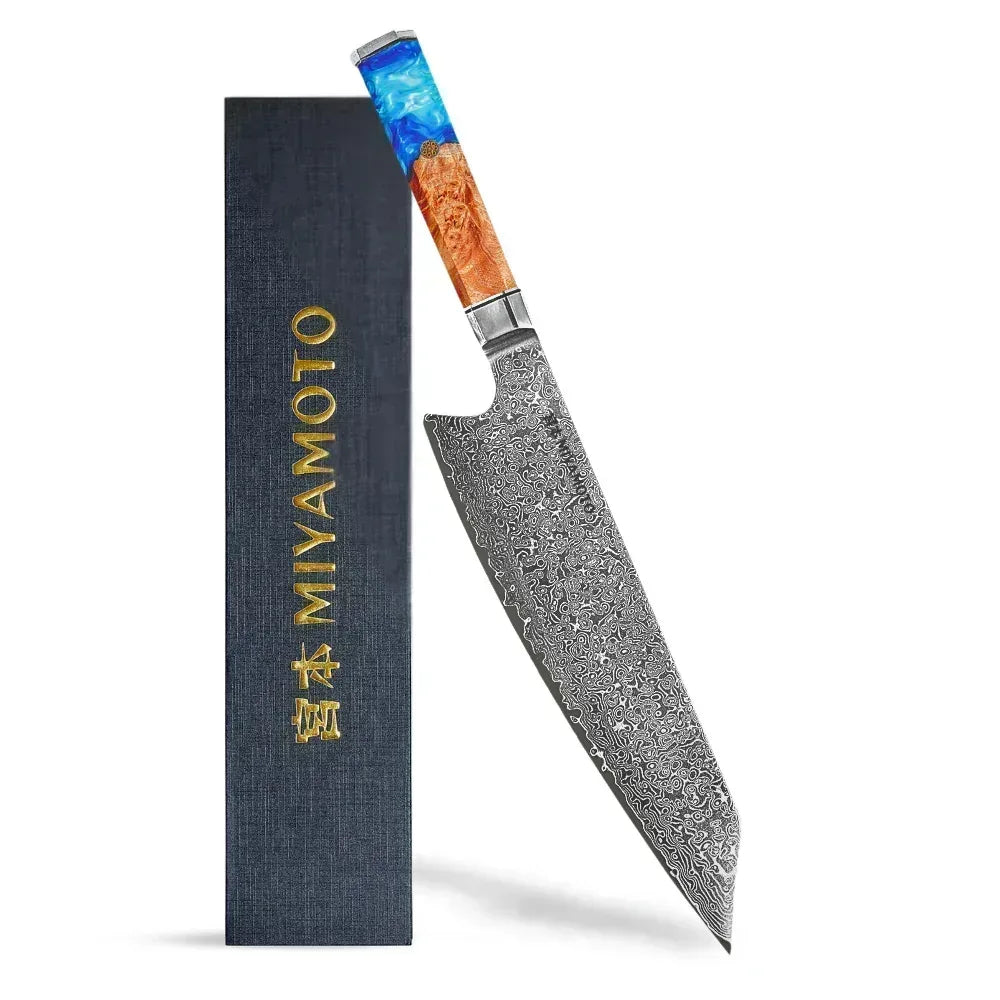
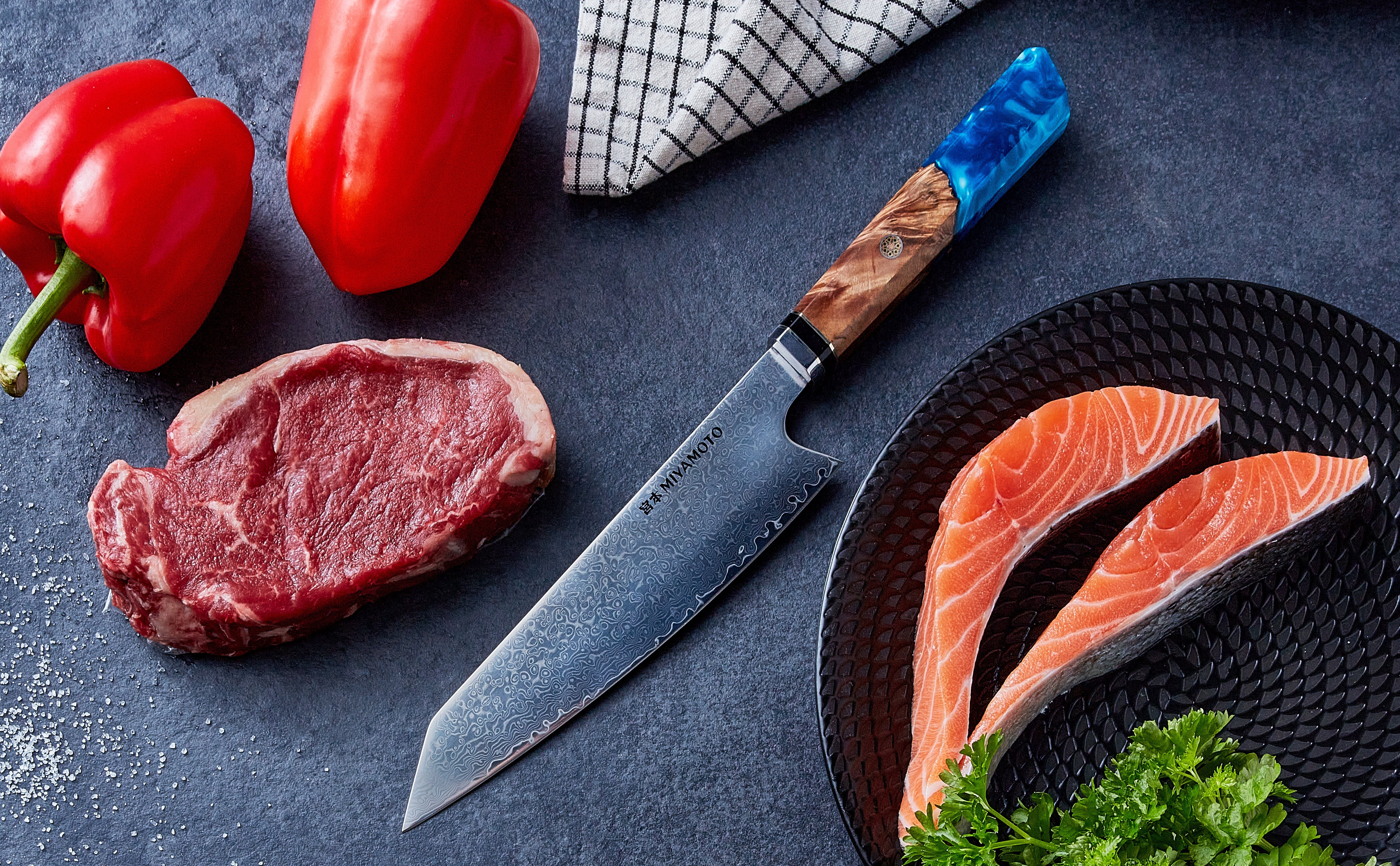
A Damascus Miyamoto knife is designed for exceptional sharpness, precision, and durability. The beautiful Damascus pattern is created by layering steel, producing a blade that is not only visually stunning but also engineered for high performance in the kitchen. However, even the best knives require proper care. By maintaining and sharpening your knife correctly, you can ensure it stays razor sharp, safe to use, and performing at its peak for years. In this guide, we’ll walk through how to handle, clean, store, and sharpen a Damascus knife properly, along with the best tools to keep it in perfect condition. Handle Your Damascus Knife Correctly Damascus kitchen knives are built for precision cutting, not heavy-duty force. Your knife should be used for: Slicing vegetables Cutting boneless meats Preparing fruits Chopping herbs General kitchen preparation Avoid using your knife for: Cutting bones Frozen foods Opening packaging Scraping food off the chopping board with the blade edge If you need to move food from your chopping board, use the spine (the back of the knife) instead of the sharp edge. Proper handling prevents blade chipping and premature dulling, keeping your knife in top condition. Use the Right Cutting Board Your cutting surface plays a huge role in preserving your knife’s sharp edge. The best surfaces for Damascus knives are: Wooden chopping boards Bamboo chopping boards High-quality plastic cutting boards Avoid cutting on hard surfaces such as: Glass cutting boards Marble countertops Ceramic plates Stone surfaces These materials can dull even the sharpest Damascus steel knife within minutes. For the best performance, we recommend pairing your knife with a high-quality wooden chopping board. Clean Your Damascus Knife Properly One of the most important rules of knife care is simple: Never put a Damascus knife in the dishwasher. Dishwashers expose the blade to harsh detergents, high heat, and prolonged moisture which can damage the steel and dull the edge. Instead, follow these simple steps: Rinse the knife with warm water after use Use mild dish soap and a soft sponge Dry the knife immediately with a towel Keeping your knife clean and dry protects the blade’s finish, sharpness, and Damascus pattern. Store Your Knife Safely Proper storage protects both your knife and your fingers. The best storage options include: Magnetic knife strips Wooden knife blocks Protective blade guards Avoid placing knives loosely in drawers where they can knock against other utensils and damage the blade edge. Safe storage keeps your knife sharp and prevents unnecessary wear. Keep Your Damascus Knife Razor Sharp A sharp knife is safer, easier to use, and produces cleaner cuts. Over time, even premium Damascus knives will naturally lose some of their sharpness with regular use. Maintaining the blade regularly will keep it performing like new. The Easiest Way to Sharpen Your Knife While traditional sharpening stones work well, they require experience and practice to achieve the perfect angle. For fast, consistent sharpening at home, we recommend using the Lux Resin Knife Sharpener. The Lux Resin Knife Sharpener is designed to: Restore razor-sharp edges in seconds Maintain the ideal sharpening angle Extend the lifespan of your kitchen knives Work perfectly with Damascus steel blades Instead of struggling with complicated sharpening techniques, our sharpener makes it simple to bring your knife back to peak performance quickly and safely. Regular sharpening keeps your Damascus knife precise, efficient, and enjoyable to use every time you cook. Oil the Blade Occasionally If your Damascus knife contains high-carbon steel, applying a light layer of food-safe mineral oil occasionally can help protect the blade. This helps: Prevent oxidation Preserve the blade finish Enhance the Damascus pattern Simply apply a thin coat with a cloth and wipe off any excess oil. Why Proper Knife Care Matters Taking care of your Damascus knife ensures: Longer blade lifespan Better cutting performance Safer food preparation Preservation of the Damascus steel pattern With the right maintenance routine and the proper sharpening tools, your knife can stay razor sharp and beautiful for years to come. Final Thoughts A Damascus Miyamoto knife is an investment in precision, craftsmanship, and professional-level cooking performance. By using proper cutting techniques, cleaning the blade correctly, storing it safely, and maintaining the edge with the Lux Resin Knife Sharpener, you can keep your knife performing like new. Whether you're slicing vegetables or preparing a full meal, a properly maintained knife makes every cooking experience smoother, safer, and more enjoyable.
Learn more
Rustic Charcuterie Board for Entertaining
A well-curated charcuterie board is the perfect centerpiece for gatherings. From cured meats to artisanal cheeses, this rustic spread showcases the versatility and beauty of a premium board. A sharp knife ensures each slice is clean and each portion is just right. Ingredients (Feel free to mix and match) Selection of cured meats (prosciutto, salami, chorizo) Variety of cheeses (soft brie, sharp cheddar, aged gouda) Fresh fruits (grapes, apple slices, berries) Assorted crackers or slices of fresh bread Olives or pickles for tangy contrast Jam or honey for sweetness Optional nuts or dried fruits Instructions Start with a clean, sturdy cutting board. Arrange the largest items first, such as cheeses and small bowls of olives or spreads. Use a sharp knife to slice cured meats into manageable portions, folding or rolling them for a more appealing display. Place fresh fruits around the meats and cheeses, pairing sweet flavors with salty or tangy ones. Fill in the gaps with crackers, nuts, or dried fruits, adding pops of color and texture. Drizzle a bit of honey or jam onto the cheese for added flavor, or serve it in a small dish for guests to add themselves. Presentation is key: the natural grain of a high-quality cutting board enhances the overall look of your spread. Plus, using the right knife makes slicing both meats and cheeses effortless, ensuring your charcuterie board looks as good as it tastes.
Learn more